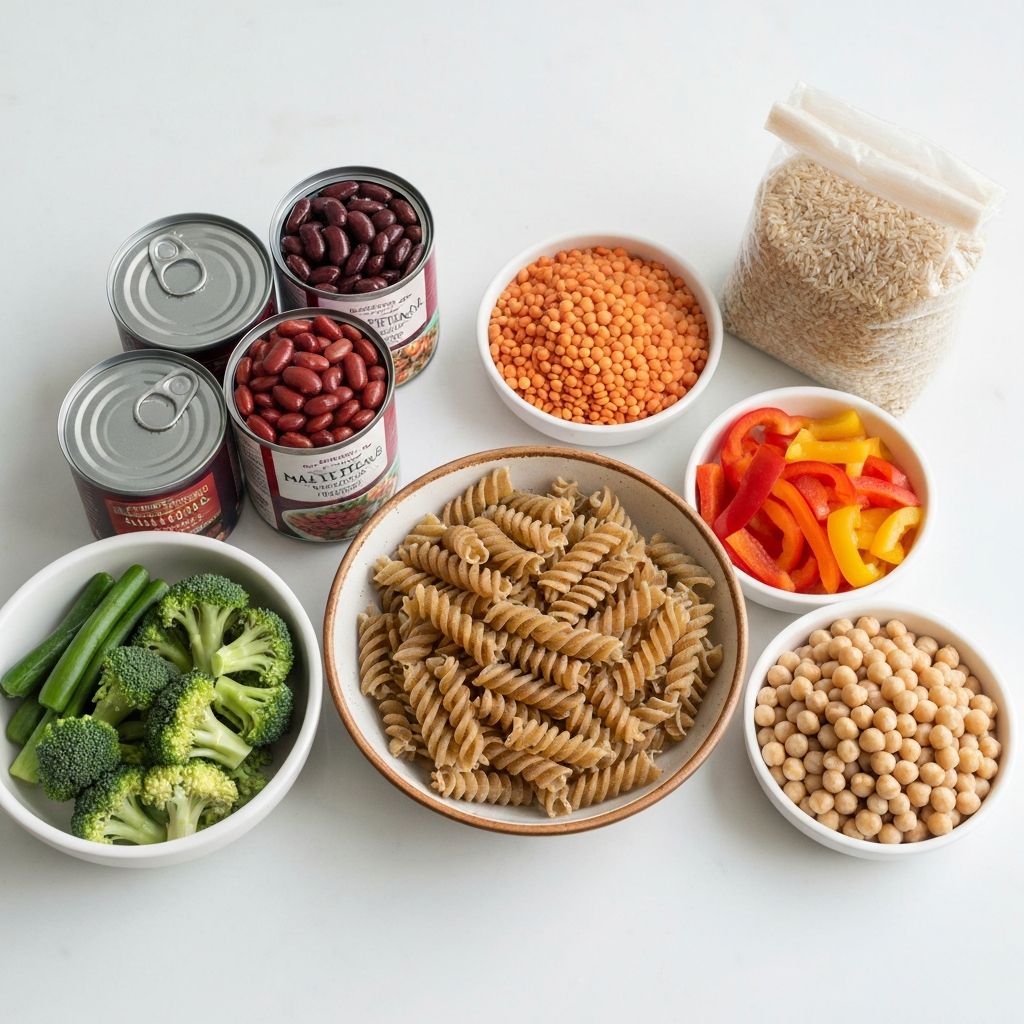
Understanding Lunch Pantry Components
Lunch preparation frequently utilizes pantry staples that can be prepared relatively quickly or incorporated into various meal types. Nutritional education discusses these items in the context of midday meals that balance convenience with nutritional diversity.
This content provides educational information about commonly discussed food categories and does not constitute personalized dietary guidance.
Grain-Based Staples
Whole grains and grain products form a frequent basis for lunch meals in many dietary patterns:
- Whole Grain Pasta: Often mentioned as a versatile lunch base that combines with various vegetables and protein sources. Dried pasta stores well and cooks relatively quickly.
- Rice Varieties: Brown rice, wild rice, and other whole grain rice options appear in educational discussions about lunch meal composition. They pair with numerous other ingredients.
- Quinoa and Other Ancient Grains: Increasingly discussed in contemporary nutrition education as lunch components that provide both carbohydrates and protein.
- Whole Grain Bread: Used for sandwiches and other lunch preparations, representing a convenient grain source.
Legumes and Plant Proteins
Legumes appear prominently in nutritional discussions about lunch meals due to their protein and fiber content:
- Canned Beans: Black beans, kidney beans, chickpeas, and other varieties provide pantry-stable protein sources. They require minimal preparation and integrate into salads, grain bowls, or standalone dishes.
- Lentils: Both canned and dried lentils are frequently mentioned in lunch contexts. They cook more quickly than many other legumes and work in soups, salads, or side dishes.
- Split Peas: Often discussed in relation to soups and stews suitable for lunch meals.
Preserved Vegetables
Pantry-stable vegetables extend vegetable availability and support lunch preparation:
- Canned Tomatoes: Nutritionists note these as bases for sauces, soups, and various lunch preparations. Different forms including diced, crushed, and whole tomatoes serve different purposes.
- Canned Vegetables: While fresh vegetables are often emphasized, canned varieties provide convenient options that maintain most nutritional value. Common examples include corn, green beans, and mixed vegetables.
- Jarred Vegetables: Roasted peppers, artichokes, and similar items add flavor and variety to lunch meals.
Flavor Enhancers and Condiments
Educational materials note various pantry items that add flavor without necessarily adding significant calories:
- Herbs and Spices: Dried herbs, black pepper, and various spice blends enhance lunch dishes
- Vinegars: Balsamic, red wine, and other vinegars are mentioned in salad and cooking contexts
- Olive Oil: Frequently discussed as a source of healthy fats in lunch preparation
- Mustards and Other Condiments: Add flavor to sandwiches and other lunch items
Common Lunch Patterns
Nutrition education describes various patterns for combining pantry staples into lunch meals:
- Grain Bowls: Combinations of whole grains, legumes, and vegetables with various seasonings
- Pasta Dishes: Whole grain pasta with tomato-based sauces, vegetables, and sometimes legumes
- Soups and Stews: Legume-based soups incorporating vegetables and grains
- Sandwiches: Whole grain bread with various fillings including legume-based spreads
- Salads: Combinations incorporating grains, legumes, and preserved vegetables
These patterns represent educational descriptions rather than prescriptive recommendations. Cultural traditions, personal preferences, and individual circumstances produce enormous variation in lunch meal composition.
Preparation Efficiency
Educational resources often note the practical aspects of using pantry staples for lunch:
- Many pantry items require minimal active preparation time
- Batch cooking grain and legume bases can support multiple lunch meals
- Pantry staples enable lunch preparation even when fresh ingredients are limited
- Understanding versatile combinations supports varied lunch options from similar base ingredients
Nutritional Considerations
Nutrition educators commonly discuss several principles related to lunch meal composition:
- Including protein sources helps with satiety through the afternoon
- Fiber from whole grains, legumes, and vegetables contributes to digestive health
- Varying vegetable types and colors provides diverse micronutrients
- Balancing different food groups supports overall nutritional adequacy
These represent general educational principles rather than specific guidelines applicable to all individuals.